

Last month, while coding, I hit a very specific database error and had to do a Google search to fix it.
In the old days, you'd end up an aStack Overflow thread from years ago or personal developer blog.
The person experiencing the error would explain how frustrated they were that night, what methods they tried and failed, and finally, give you those magic two lines of code. With every word , you could feel there was flesh and blood human behind the text, sweating and pounding the keyboard.
But the result I got that day was very different.
The first three sitesi I clicked were massive 2.000 word articles explaining the exact same error under different headings, written with flawless grammar and decorated with bullet points. The articles looked so smooth, so "correct", that at first, I was happy, thinking I had found found my answer.
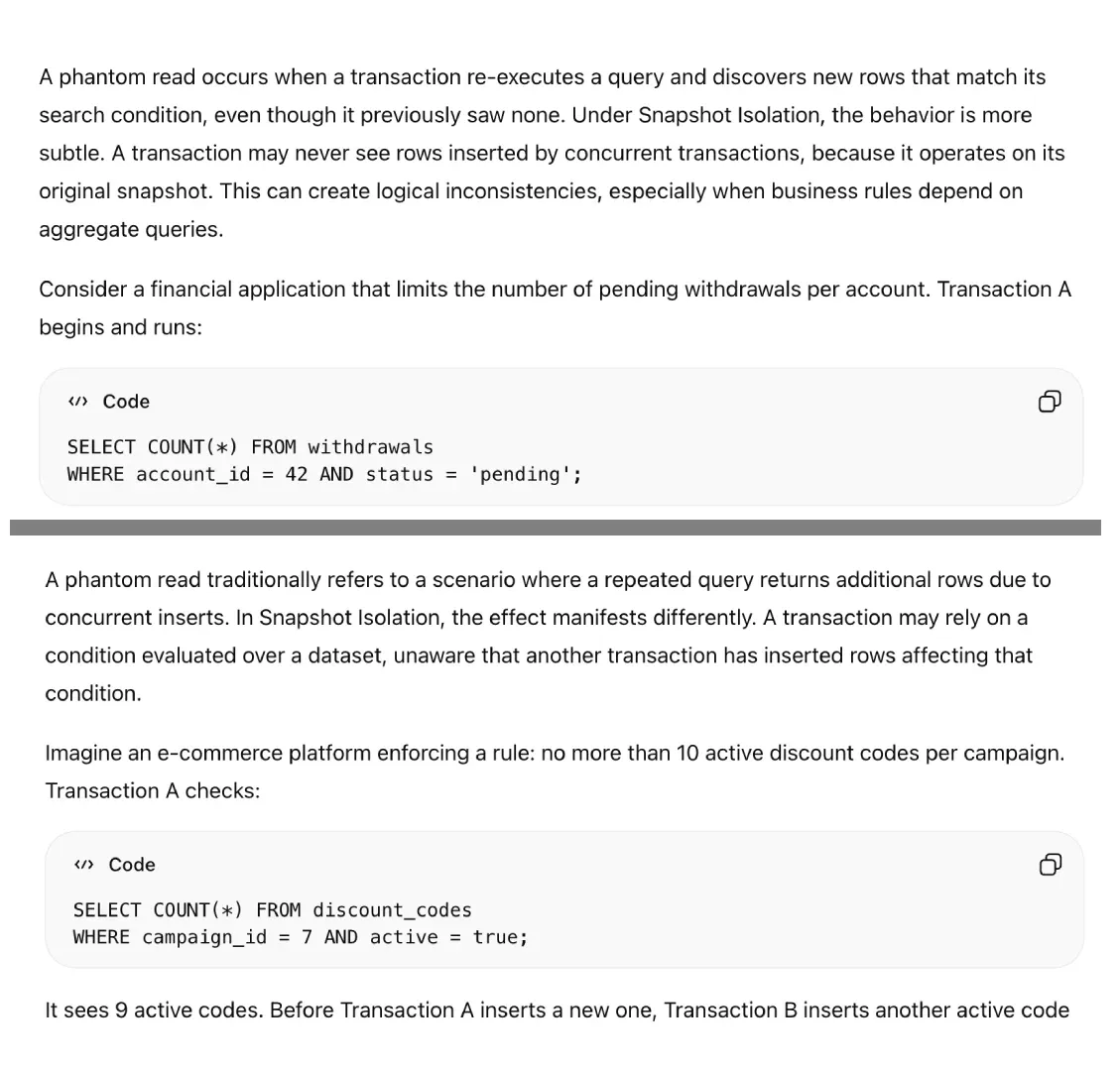
But as I read on, that weird feeling crept in: the sentences flowed, but they weren't actually saying anything. It was a completely flat, risk-free, emotionless series of generic tips containing zero personel experience. There was no writer, no effort, no feeling behind it. It was just a "word soup" generated in seconds solely to please search engine nots.
That was the day I truly felt that the "trust layer" in dthe digital world had completely collapsed.
The Production Asymmetry and a Collapsing Ecosystem
Generative Aı tools are mind blowing pieces of technology. As developer, I have to admit I use them heavily every single day. They save me mounts of work then writing code, designing architecture, or analyzing data. But this massive power has a very serious side effect in the world of content and publishing: Production asymmetry.
In the past, there was a tangible time difference between writing a high quality article and writing a piece of garbage. As readers, we could tell the difference at a glance and we still can, actually.
Even a bad writer had to spend hours putting those bad words together. Today, things have changed. A 1,000 word text that a real writer would spend three hours researching , pondering and pouring their soul into can now be generated by someone elde in three seconds with simple prompt.
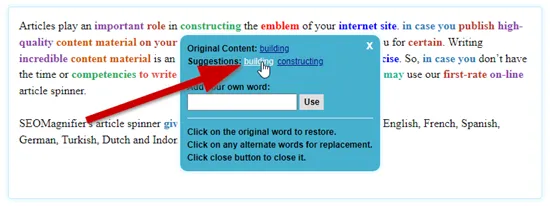
If you've been around SEO, you probably remember the past. There were article spinner apps that sold for massive amounts of money.
 Why?
Why?
Just to produce "unique" content and rank on search engines. Search engines could be manipulated, the content was absurd and it was incredibly easy to spot. But as AI evolved, AI written articles initially seemed interesting, even if people short of knew anAI wrote them.
As time passed, however, this stopped being satisfying. No matter how well they write even if it's as good as human you can spot an AI at a glance, and over time, this reality has started to genuinely annoy people.
I sometimes think that if I could take today's technology and go back 6-7 yeas for just a few days, I'd probably be a millionaire. But the landscape if different now. There is so muchAI content out there, and even thought it's well written, algorithms can detect it, people can feel it.
The result?
Neither humans nor algorithms trust this robotic content anymore.
This asymmetry has turned the internet into one giant echo chamber. Everyone is using the same tools, producing similar sentences fed by the same databases. In the feature, AI writers will get even better; maybe they'll even start emulating human emotions, or as algorithms evolve, they'll inject different perspectives and "soul" into articles. The outcome? The articles we read will still belong to robots and it will become genuinely hard for humans to tell the difference.
Perfection is cheap now. What's truly expensive and rare is "authenticity". But how are we going to prove that there is an actual human behind a text, that the writer genuinely sweated over that topic? And considering that AI models will reach even greater heights in the near future, how will this even be possible? Lets's dive deeper, and as we unfold the topic, you!ll find the answers one by one.
The Failure of AI Detectors
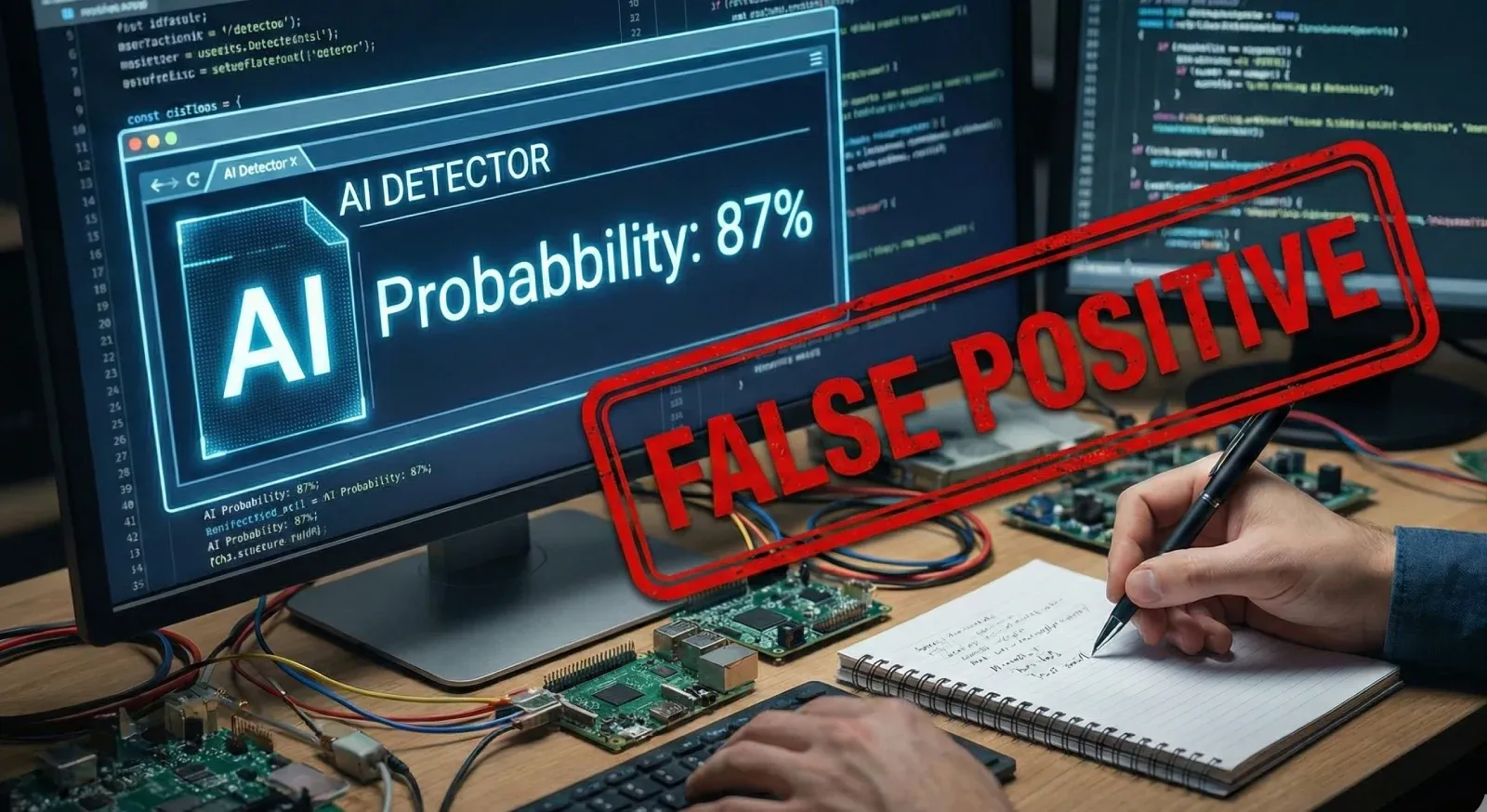
How will we distinguish between real and robot writing? The first solution that comes to mind is using AI text detectors.
We take a text and ask another AI, Did you write this? But technically, this method is a dead end. As models improve, bypassing these detectors becomes child's play. Worse still, they can flag a text written entirely by a real human as AI (a false positive), which is a direct insult to the writers's hard work.
We could't judge the process by looking at the outcome. We had to measure the process itself. The idea for TheQuill.Pub was born exactly from this technical awakening.
A Trust Layer: Organic Score
We needed tho prove to the reader that the actually sweated over the piece. We needed a sort of Proof of Work system.
When designing TheQuill.Pub, we built the system entirely on behavioral data. On the platform, we call this the "Organic Score". This system does'n care on bir about how beautifully or flawlessly a text is written in English.
To be honest, it doesn't even look at grammar rules or the emotion of the writing. The only thing it cares about is your physical presence at the keyboard and your actual keystrokes.
 When you open the editor and start writing, the system track your rhythm in the background.
It records those three second pauses ehen you type two words and think about how to finish the sentence; it tracks when you delete and fix a typo, or when you highlight an entire paragraph, say "no, this isn't working," and rewrite it from scratch. It measures thet flawed but organic glow of data between the human brain and the keyboard, turns it into data, and silently watches you.

But what about those who want to game the system?
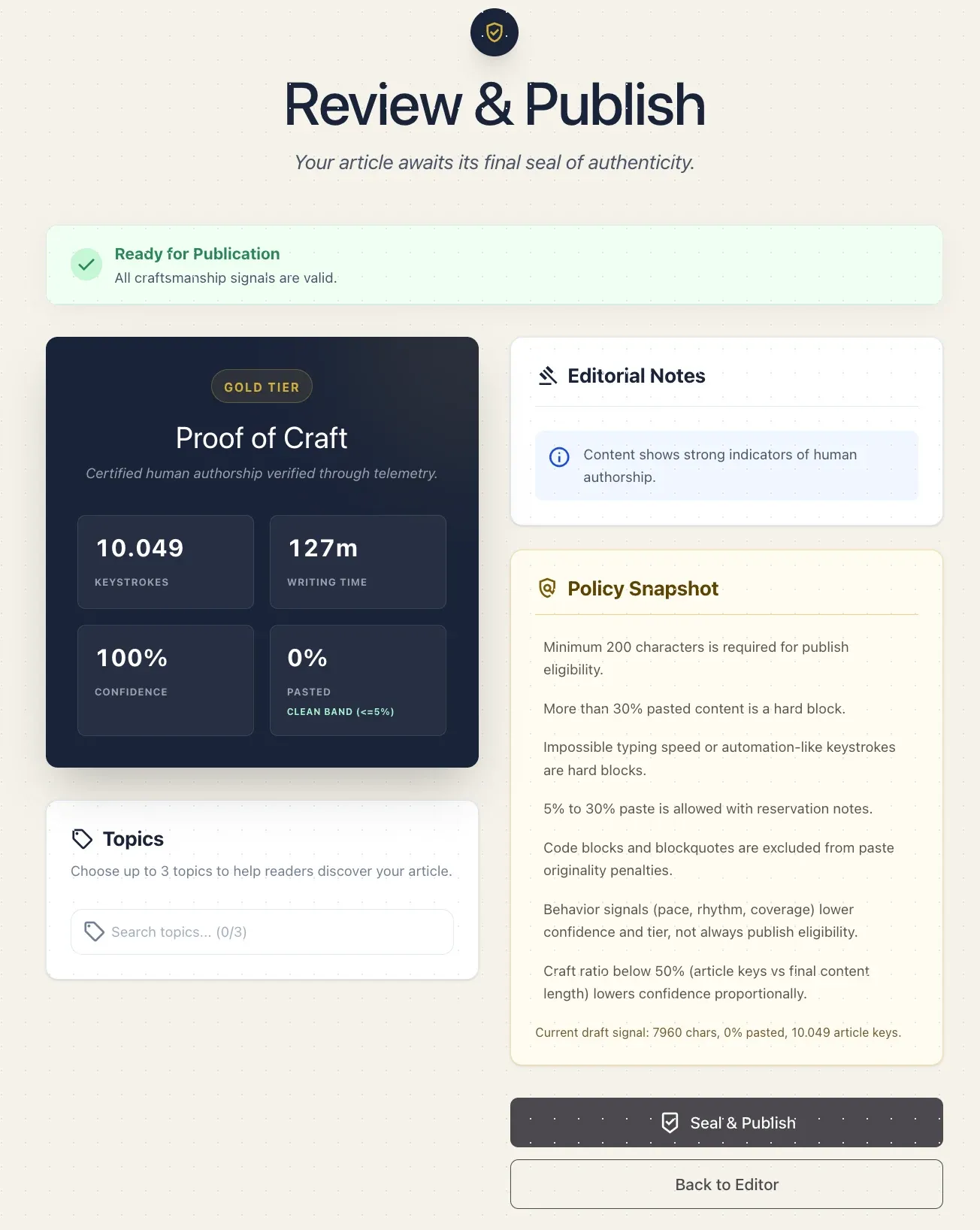 When writing the code for TheQuill, we based our first tests entirely on this. Frankly, this was the part that took the longest, and while it's had to call it flawless, it delivered near perfect results.
Initial Algorithm Tests
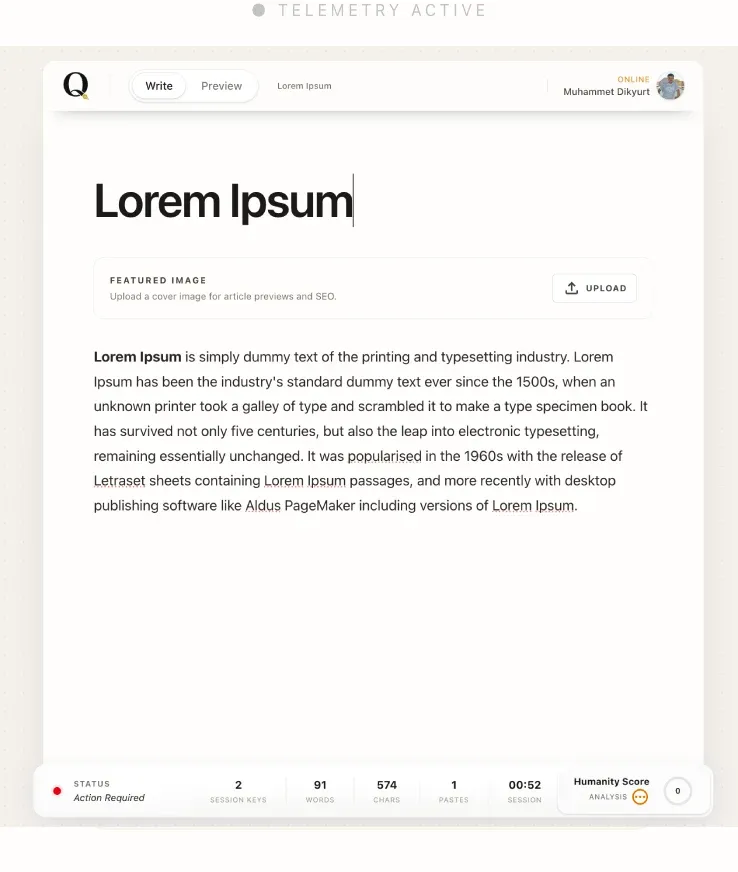
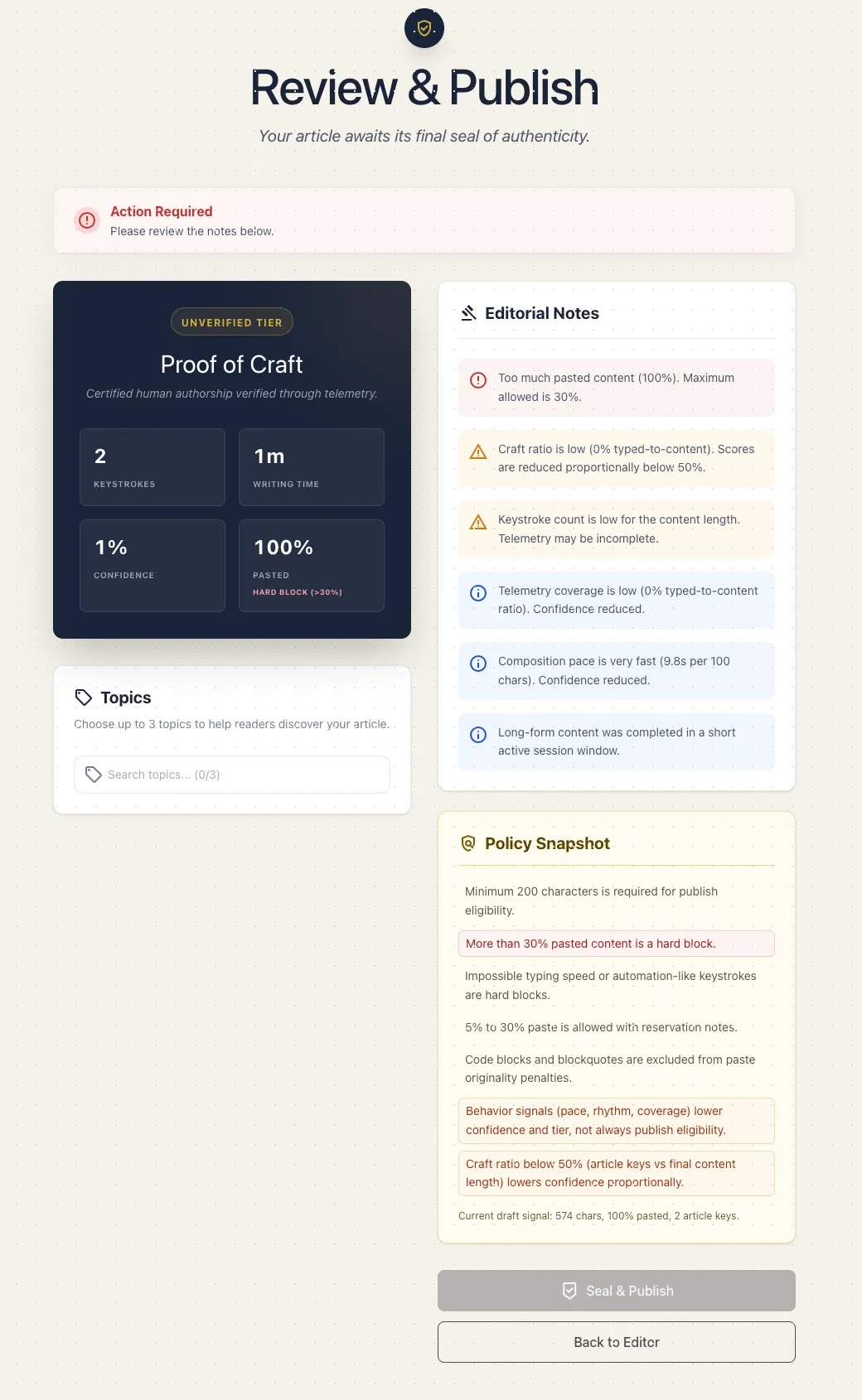
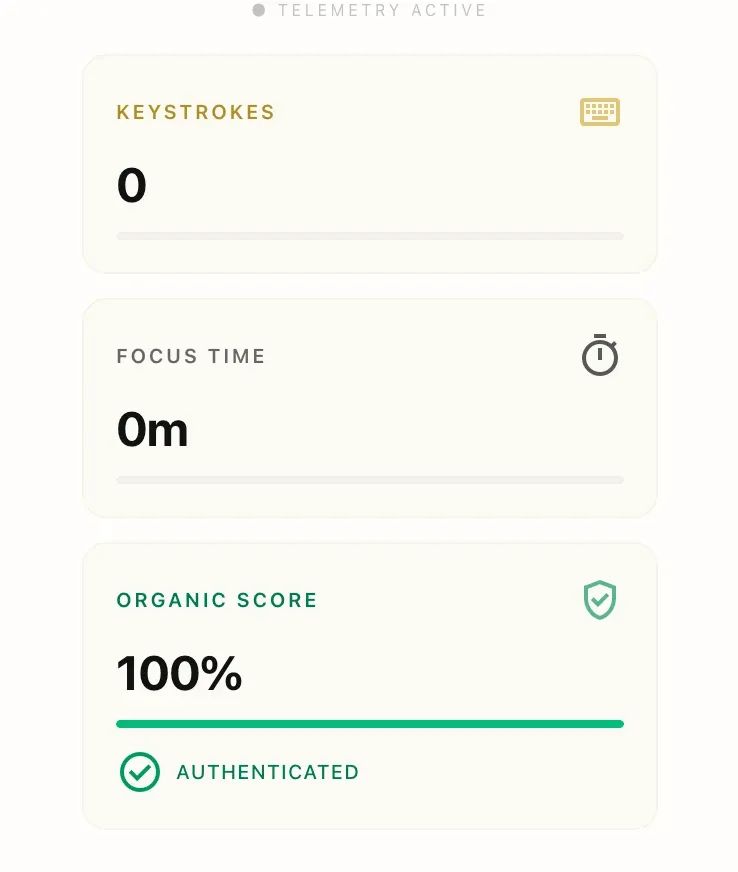 To test the systems's reliability, I went to ChatGPT, had it write a spectacular article, and ten hit Ctrl+V (Paste) into TheQuill editor. The system instantly caught this 1,500 word block that suddenly appeared with zero keystrokes. Organic Score: 0%.
Sometimes, people might try to be clever and manipulate the score by going into the text, adding a few spaces and deleting them.
When that happens, the system steps in and says, "This person generated a transaction volume of 2,000 words in 5 minutes: this is beyond the limits of human speed," and thanks the trust score. We didn't just block "Paste"; we made actual Crafting (typing) mandatory.
 Pro Human, Not Anti-Ai
There's a very crucial detail I want to underline here. TheQuill.pub is not a Luddite (anti technology) platform. Our goals is not to declare A.ı the enemy. Writers can absolutely use AI tools when doing research, gathering ideas, or brainstorming titles for their articles.
There is absolutely no problem with that.
The problem arises when the writer completely steps out of the loop and hands over production to the machine. That's when the intimate bond between the the reader and the writer breaks.
What we aim to do with TheQuill is to pull human effort out of that mechanical noise. When a reader sees an article on our platform with an Organic Score of over 90%, they will know one thing for certain: someone actually sat down behind those words, spent their time, made mistakes, deleted them, and rewrote them.
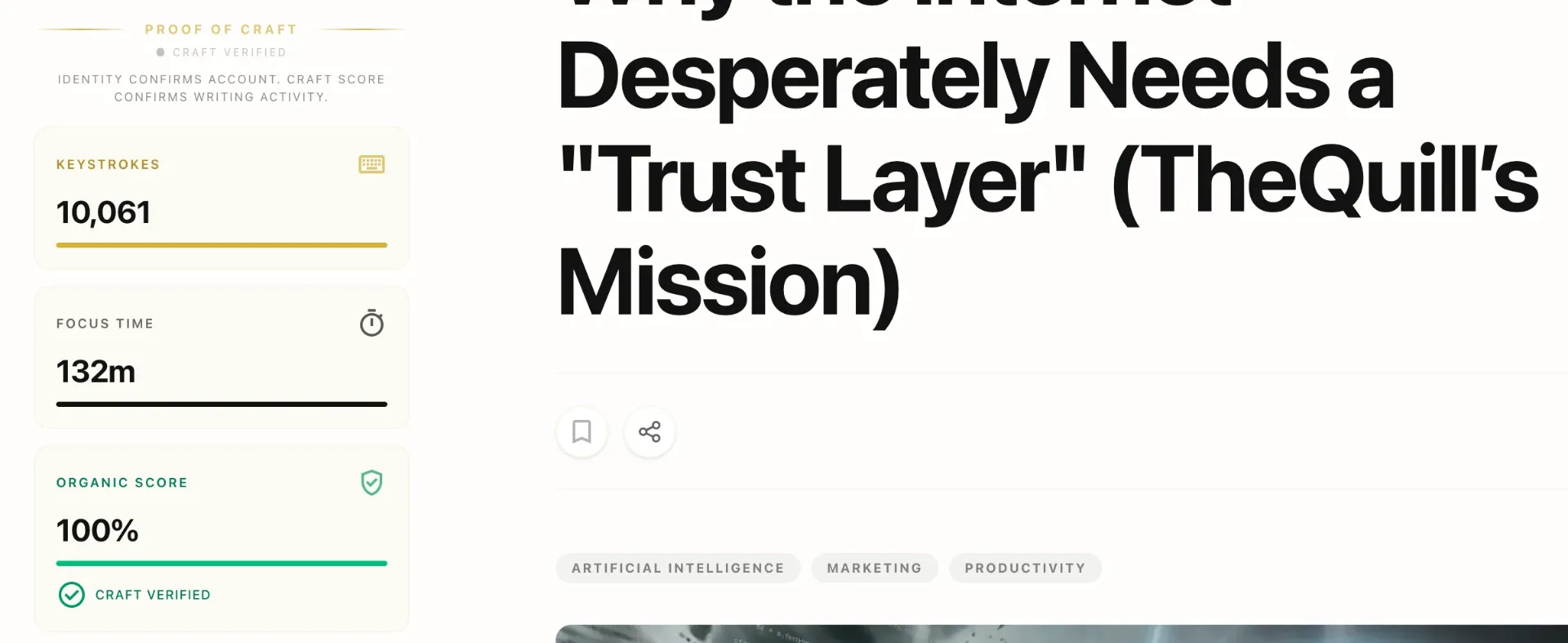 What you are reading isn't a statistical probability calculation; it as a direct dump of a human being's thoughts.
The internet urgently needs a new trust layer. We are hungry for the honesty of the source much mode than the sheer volume of quality content. With TheQuill.pub, we are starting to rebuild that layer, one keystroke at a time.
If you, too, are looking for a place where that you write is read not by search engine bots, but by real humans appreciating real effort it's time yo get behind the keyboard.